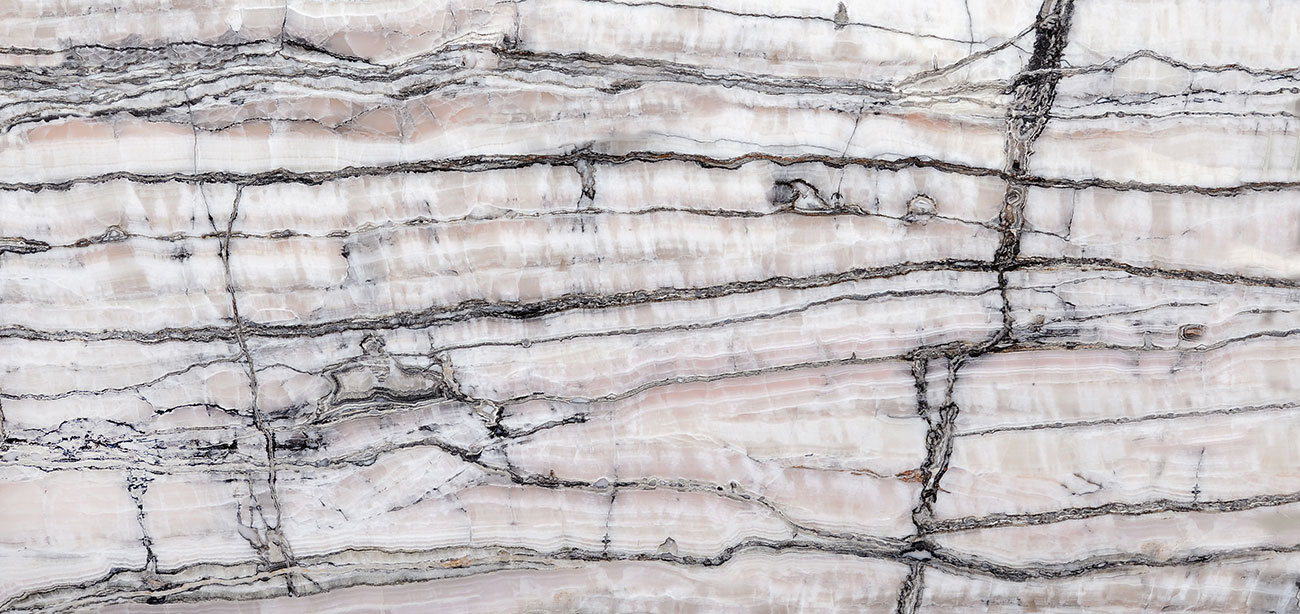
Veined marble is defined by the streaks that stand out against the even background of the stone, known as marble veins. Veining is never the same from one slab to the next: veins can differ in color, direction, pattern and thickness, and they can be more or less pronounced, or more or less dense.


Different types of veining give rise to different veined marbles. These are the main veining patterns used to classify veined marble:
For centuries, pure crystalline white marble was considered the marble par excellence, and its flawless white color still makes it the most coveted today. Demand for veined marble has grown steadily, though, even for stones with more unusual veining and color. After all, veined marble is by nature the best stone to showcase the uniqueness of natural stone and its one-of-a-kind patterns. Its veining also brings movement and energy to a room like no other type of marble.

Luxurious furniture in lightweight marble
Dedalo is a company from Carrara that designs and produce monolithic luxurious furnishings in lightened marble, with a contemporary design. Our goal is to reaffirm the use of marble in everyday life without renouncing, for reasons of weight, to its three-dimensional vocation, proposing sculptural and extremely engaging shapes.