Contents
A travertine kitchen is a timeless choice that combines the natural beauty of stone with the durability and practicality required in one of the most used spaces in the home. Used since ancient times for monumental architecture, this material is making a strong comeback in modern homes thanks to its warm texture and unique veining, which makes every surface one of a kind. Whether used for the countertop, kitchen island, or flooring, a travertine kitchen conveys a sense of authenticity and craftsmanship that few other materials can match.
Travertine is a naturally formed sedimentary limestone, created by the deposition of calcium carbonate in mineral-rich hot springs or watercourses. Its porous surface and shades ranging from beige to walnut make it a warm, welcoming, and highly versatile stone. Each slab of travertine is unique: the natural holes and veining tell its geological story, adding a rustic yet sophisticated charm to any surface. This inherent uniqueness makes travertine perfect for those seeking a custom, one-of-a-kind kitchen.
One of the main benefits of travertine is its heat resistance and long-lasting durability. Unlike many other materials, it can withstand high temperatures and can be restored through polishing, honing, and sealing treatments. Its ability to adapt to a wide range of styles—from rustic to modern minimalism—makes it an ideal choice for both elegant and country or industrial-style kitchens. Visually, it brings depth and warmth, creating a soothing and natural atmosphere.
Although durable, travertine is a porous stone and requires proper sealing to protect it from stains and acidic liquids. Like marble and other calcareous stones, it’s best to avoid aggressive or descaling cleaners in favor of pH-neutral products made for natural stone. Regular maintenance ensures your kitchen retains its original beauty for decades.
A natural travertine kitchen countertop delivers unmatched authenticity and tactile richness. However, it does require ongoing care and maintenance. More affordable and practical options like porcelain stoneware with a travertine effect or HPL laminate are stain-resistant and easy to clean. The choice between natural and imitation materials depends on your budget and lifestyle: those who prefer low-maintenance perfection may opt for porcelain, while lovers of authentic materials will find timeless appeal in real travertine.
Common travertine finishes for kitchens include polished, which offers a glossy and elegant look, and brushed or honed, which feel softer and more natural to the touch. The color palette ranges from white and beige to warmer tones like honey or walnut. Popular varieties such as Classic Roman Travertine or Navona are prized for their neutral tones and easy pairing with wood, steel, or porcelain.
Travertine works beautifully in a range of styles. In modern kitchens, it contrasts nicely with minimalist cabinetry and brushed metal finishes, creating a sleek material balance. In rustic or country settings, it pairs effortlessly with solid wood and warm finishes for a cozy, traditional effect. The key is to balance textures: stone’s cool feel harmonizes well with warm materials like wood and copper.
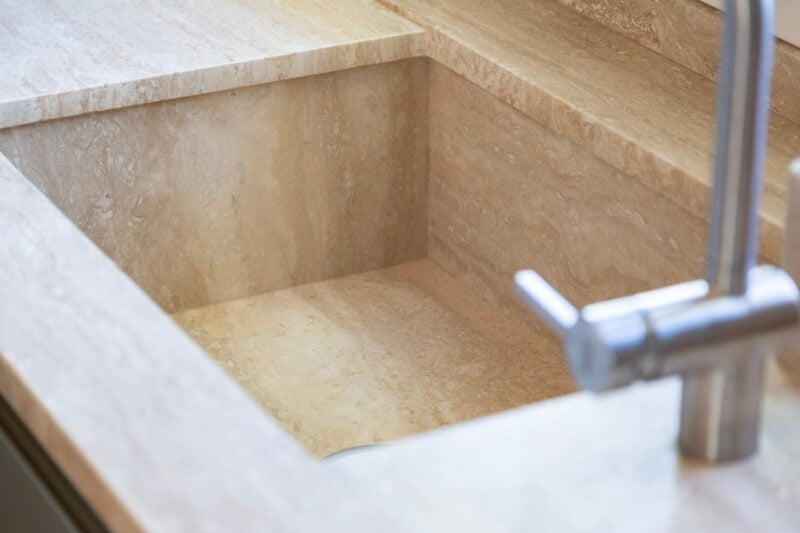
A travertine kitchen countertop with integrated sink makes a bold design statement. Whether carved from a single block or assembled seamlessly, it creates a continuous, monolithic look that feels refined and sculptural. Often handcrafted and made to order, this solution allows for a sink perfectly built into the stone, with no visible seams. It’s ideal for those seeking a clean, cohesive aesthetic—but it requires skilled craftsmanship and proper sealing to withstand daily water and cleaner exposure.

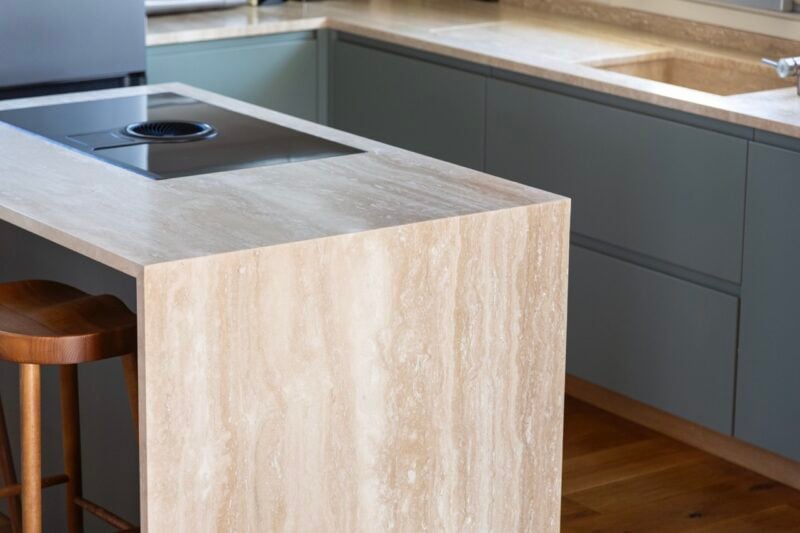
A travertine kitchen island becomes the centerpiece of a modern kitchen, functioning as a work surface, dining area, or stunning design element. Its visual power lies in the compactness and natural charm of the stone, which adds a solid and luxurious feel to the room. Paired with soft lighting or wood accents, whether large or small, a travertine island becomes the focal point of the space—beautiful and built for everyday living.
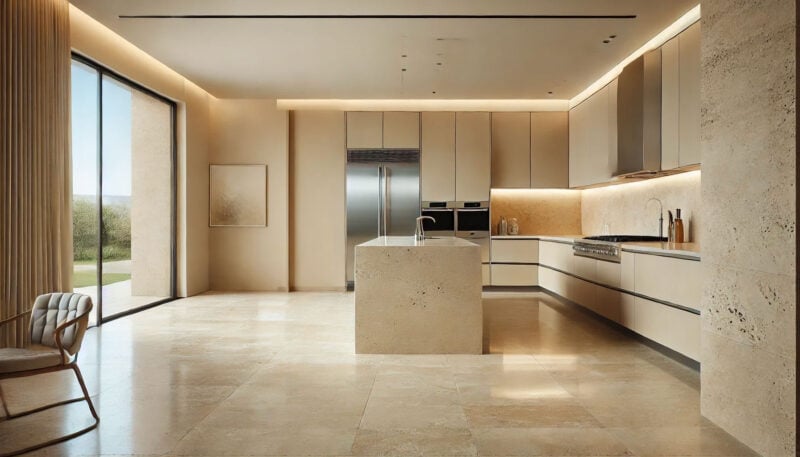
A travertine floor brings elegance and visual flow to the kitchen. When used alongside matching countertops or wall cladding, it creates a cohesive, natural effect. Many designers choose travertine flooring to contrast with modern cabinetry and enhance a space’s brightness. Available in various sizes—from large slabs to narrow planks—it allows for customization based on the room’s layout. In high-end projects, clients can even select the exact stone blocks to ensure every piece fits the overall design.

To keep travertine looking beautiful, always use neutral, non-acidic cleaners. Avoid vinegar, lemon juice, or bleach, which can dull the surface. After use, simply wipe with a damp cloth and dry thoroughly. Stone-specific cleaners made with neutral soap help preserve the stone’s shine and protect it over time.
A periodic sealing treatment—ideally once a year—is recommended to prevent absorption of liquids and stains. Transparent or matte sealers won’t alter the stone’s natural color. Alternatively, waxes or protective oils can enhance the tone and make surfaces easier to clean.
The cost of a travertine kitchen depends on various elements: stone type, origin, finish, and the complexity of the design. A natural travertine countertop may start at around €250/m², while custom designs or integrated sink options can exceed €500/m². Thickness and the specific type of travertine also significantly affect the final price.
Compared to materials like quartz or stone-effect porcelain, travertine stands out for its natural prestige and inherent beauty. That said, porcelain travertine-look surfaces offer a more budget-friendly, low-maintenance alternative. The decision ultimately comes down to your priorities: authenticity and luxury, or practicality and affordability.
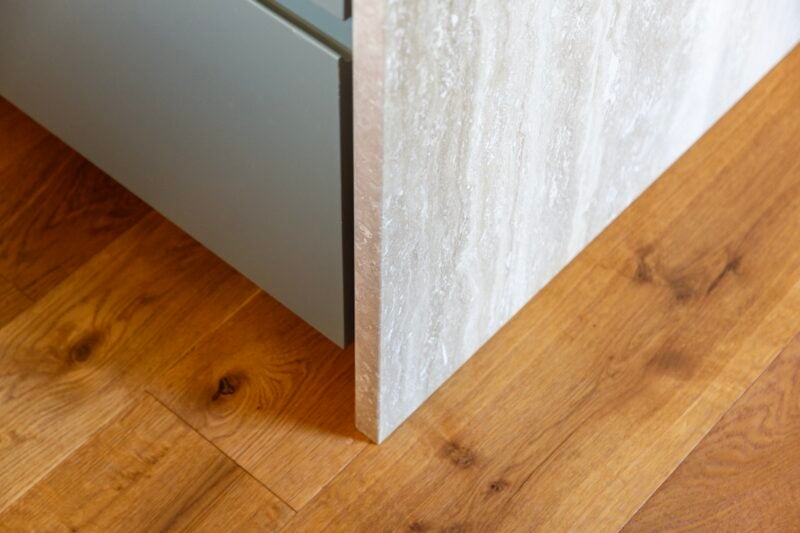
Pairing travertine and wood flooring creates a sophisticated material contrast. Travertine’s bright, mineral texture pairs beautifully with the warmth and softness of wood. It’s a great choice for open-plan kitchens, where stone can define the work zone and wood the dining or living area. To achieve a balanced result, stick to a cohesive color palette and choose warm, natural tones.
A travertine kitchen with wood flooring offers a refined, welcoming aesthetic. The stone enhances natural light, while the wood adds comfort and intimacy. This pairing is especially effective in contemporary or minimalist kitchens, where authentic materials and natural textures take center stage. The result is a space that feels grounded, harmonious, and elegantly timeless.
Travertine can be a good choice for kitchens if the surface is properly sealed and maintained. It offers a natural, elegant look that suits both classic and modern interiors. However, its porous nature makes regular care important in busy spaces.
Travertine is porous and can stain, scratch, or etch more easily than some other countertop materials. It also requires sealing and more maintenance over time to preserve its appearance. These factors make it less practical for homeowners seeking a low-maintenance surface.
Travertine is often less expensive than granite, especially in standard finishes and common formats. Final pricing depends on slab quality, thickness, and installation complexity. In some premium selections, the cost difference can become smaller.
High end homes often use quartz, marble, granite, and other premium natural stones for countertops. These materials are chosen for their durability, visual impact, and overall design value. Custom fabrication and refined finishes also contribute to a more luxurious result.








Luxurious furniture in lightweight marble
Dedalo is a company from Carrara that designs and produce monolithic luxurious furnishings in lightened marble, with a contemporary design. Our goal is to reaffirm the use of marble in everyday life without renouncing, for reasons of weight, to its three-dimensional vocation, proposing sculptural and extremely engaging shapes.