Contents
Ludwig Mies van der Rohe, often simply referred to as Mies van der Rohe, is one of the most renowned and influential figures in modern architecture. As a pioneer of modernism, Mies left an indelible mark on the world of architecture with his minimalist and innovative designs.
His philosophy of “Less is more” revolutionized the way spaces are conceived, utilizing modern materials such as glass and steel to create functional yet aesthetically extraordinary buildings. This article delves into the life, works, philosophy, and legacy of this extraordinary architect.
Born Ludwig Mies on March 27, 1886, in Aachen, Germany, he was the son of a stonemason. Mies developed an early interest in architecture, starting his career as an apprentice in various German architectural firms. His education was characterized by hands-on learning, where he honed his practical and theoretical skills. He later added “van der Rohe” to his name to give it a touch of distinction, reflecting his Dutch heritage.
In 1930, Mies van der Rohe became the director of the Bauhaus, one of the most influential design schools of the 20th century. Under his leadership, the Bauhaus focused on integrating art, craftsmanship, and technology, promoting a functional and innovative approach to architecture. However, with the rise of the Nazi regime, the school was forced to close in 1933. Despite this, Mies’s influence on the Bauhaus endured, helping to shape modernism.
With the advent of Nazism, Mies emigrated to the United States in 1937. He accepted a position at the Armour Institute (now the Illinois Institute of Technology) in Chicago, where he developed a new approach to architecture. In the U.S., Mies designed some of his most iconic works, continuing to experiment with innovative materials and techniques. His move to America marked the beginning of a new era for his career and modern architecture.
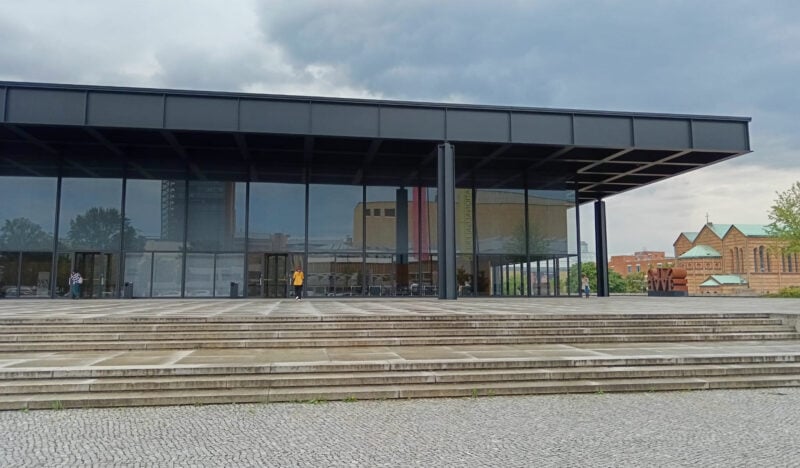
The Neue Nationalgalerie, designed by Ludwig Mies van der Rohe and inaugurated in 1968 in Berlin, is one of the architect’s last masterpieces. This modern art museum is renowned for its minimalist design and innovative use of materials. The main structure, a rectangular exhibition hall made of steel and glass, is distinguished by its flat roof supported by eight slender steel columns, creating a sense of lightness and transparency. The spacious and bright interior allows for a continuous visual connection between the inside and outside, making the visit a unique experience. The Neue Nationalgalerie is not only an icon of modernism but also a lasting testament to Mies van der Rohe’s “Less is more” philosophy.
Designed for the 1929 International Exposition, the Barcelona Pavilion is one of Mies van der Rohe’s most emblematic works. This temporary structure, characterized by clean lines and innovative use of glass and marble, represented a break from traditional architectural styles. Although the pavilion was demolished shortly after the exposition, it was reconstructed in the 1980s and remains a must-visit for architecture enthusiasts.
Located in Brno, Czech Republic, the Tugendhat Villa is another outstanding example of Mies van der Rohe’s work. Built between 1928 and 1930, this private residence is renowned for its open structure and innovative use of materials. The villa features expansive glass surfaces offering panoramic views of the city and minimalist, functional interiors. It was declared a UNESCO World Heritage Site in 2001.
Completed in 1958 in New York City, the Seagram Building is one of Mies van der Rohe’s most iconic structures. This 38-story skyscraper, designed in collaboration with architect Philip Johnson, is a perfect example of international modernism. With its glass and steel facade, the Seagram Building profoundly influenced skyscraper architecture, setting new standards for design and functionality.
The Illinois Institute of Technology (IIT) in Chicago represents one of Mies van der Rohe’s most ambitious projects. Here, Mies redesigned the university campus, applying the principles of modernism and functional architecture. Crown Hall, home to the School of Architecture, is considered one of his masterpieces, thanks to its open structure and innovative use of space. The IIT campus stands as a significant testament to Mies’s lasting influence on contemporary architecture.
The “Less is more” philosophy is a cornerstone of Mies van der Rohe’s architectural thought. This minimalist approach focuses on eliminating the superfluous, favoring simple and functional forms. Mies believed that architecture should be essential, reducing decorative elements to emphasize the purity of lines and materials. This principle has profoundly influenced modernism and continues to inspire contemporary architects.
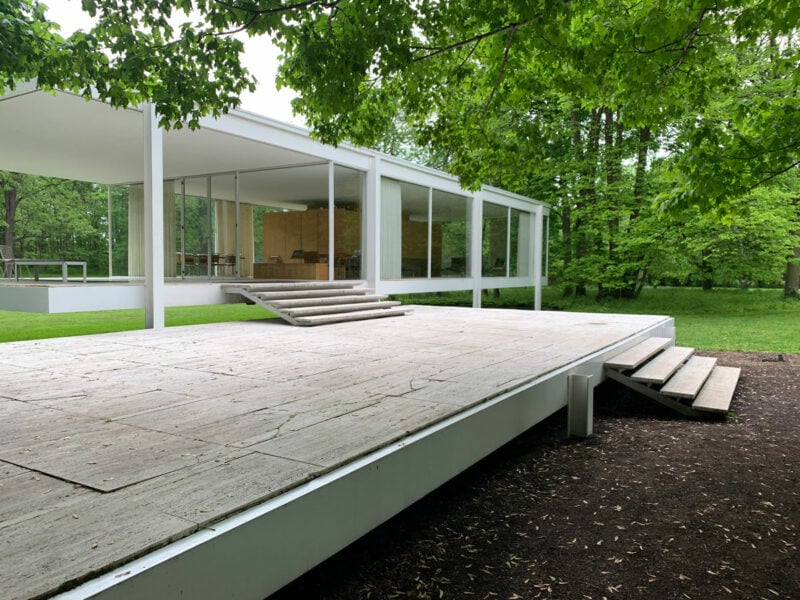
Mies van der Rohe is known for his innovative use of modern materials, particularly glass and steel. These materials allowed for the creation of open and luminous spaces, breaking away from past architectural traditions. The use of glass enabled greater transparency and connection with the external environment, while steel provided a robust and flexible structure. Mies’s skill in combining these materials resulted in buildings that are both functional and aesthetically pleasing.
Transparency and light are fundamental elements in Mies van der Rohe’s work. Using large glass surfaces, Mies created interiors that harmoniously integrated with the surrounding landscape. Natural light became an essential design element, capable of transforming spaces and creating unique atmospheres. This innovative approach revolutionized 20th-century architecture, influencing generations of architects.
The influence of Ludwig Mies van der Rohe on modernism is undeniable. His design principles, based on simplicity and rational use of materials, redefined 20th-century architecture. Many contemporary architects have adopted and developed his ideas, contributing to the global spread of modernism. Mies’s works continue to be studied and admired, representing an essential reference point for anyone interested in architecture.
Mies van der Rohe trained numerous architects who continued to propagate his design principles. Many of them achieved significant professional success, helping to keep their master’s legacy alive. Mies’s teaching, characterized by a practical and rigorous approach, profoundly influenced subsequent generations, creating a school of thought that continues to thrive.
Numerous museums and foundations worldwide are dedicated to preserving and promoting the legacy of Ludwig Mies van der Rohe. Among these, the Mies van der Rohe Pavilion in Barcelona and the Mies van der Rohe Society in Chicago are the most notable. These institutions organize exhibitions, events, and educational activities to spread knowledge of Mies’s works and ideas. Visiting these places offers the opportunity to deepen one’s understanding of Mies’s contribution to modern architecture.
The name “Mies van der Rohe” has interesting and little-known origins. Born Ludwig Mies, the architect added “van der Rohe” to his surname to give it a touch of nobility and distinguish himself in the professional landscape. “Mies” was his father’s surname, while “van der Rohe” comes from his mother, Amalie Rohe. This symbolic choice reflects Mies’s desire to create a new identity representing his innovative and cosmopolitan vision of architecture.
Mies van der Rohe’s private life is rich with anecdotes that reveal unique aspects of his personality. Known for his professional rigor, Mies was also a man of great charm and culture. He loved surrounding himself with artists, intellectuals, and creatives, engaging in lively discussions about art and architecture. Despite his austere image, Mies was known for his hospitality and sense of humor, qualities that made him a fascinating and charismatic figure.
Visiting Mies van der Rohe’s works offers a unique experience to fully understand his architectural vision. Among the must-see sites are the Barcelona Pavilion, the Tugendhat Villa in Brno, the Seagram Building in New York, and the Illinois Institute of Technology campus in Chicago. Each building represents a design masterpiece, reflecting modernism’s principles and Mies’s skill in creating functional and harmonious spaces.
To organize an architectural tour exploring Mies van der Rohe’s works, it is advisable to plan the trip carefully, including guided tours and in-depth moments. Many key sites offer guided tours that reveal unpublished details and interesting anecdotes about the design and construction of the buildings. It is also useful to consult online resources and specialized publications to enrich one’s knowledge of Mies’s works before the visit.
Like any great innovator, Mies van der Rohe sparked divergent opinions among his contemporaries. Some architects criticized his minimalist approach, considering it too rigid and devoid of human warmth. Others praised his ability to create essential and functional spaces. These differing opinions reflect the complexity and originality of Mies’s work, which always challenged conventions and stimulated architectural debate.
Despite his worldwide fame, some of Mies van der Rohe’s works are less known to the general public. Projects like the Bacardi Building in Santiago de Cuba and the Resor House in Wyoming, though not among the most famous, represent significant examples of his architectural vision. These buildings, often overlooked in mainstream discussions, offer a more comprehensive perspective on Mies’s versatility and ingenuity. Knowing these lesser-known aspects allows for a greater appreciation of his vast and profound contribution to architecture.
Photo credits:
Ron Frazier, license CC BY 2.0
Giorgio Tonacci








Luxurious furniture in lightweight marble
Dedalo is a company from Carrara that designs and produce monolithic luxurious furnishings in lightened marble, with a contemporary design. Our goal is to reaffirm the use of marble in everyday life without renouncing, for reasons of weight, to its three-dimensional vocation, proposing sculptural and extremely engaging shapes.