Contents
Gneiss is a common and highly distinctive metamorphic rock, recognized by its characteristic banding. These alternating light and dark mineral layers result from the extreme pressures and temperatures that transform its parent rock into this durable material. Often compared to granite due to their similar compositions, gneiss differs in texture and structure, making it unique in the world of geology.
Gneiss is a coarse-grained metamorphic rock that forms under intense heat and pressure. It is characterized by its gneissic banding, which is the result of mineral segregation during the metamorphic process. This rock typically consists of minerals like quartz, feldspar, and mica. Gneiss can form from different types of parent rocks, most commonly granite or schist.
Gneiss is a metamorphic rock, meaning it forms through the transformation of other rocks under extreme conditions of pressure and temperature. It originates from igneous or sedimentary rocks that undergo metamorphism, leading to the formation of its characteristic layers. The process typically occurs deep within the Earth’s crust, where these conditions are met.
The mineral composition of gneiss typically includes quartz, feldspar, and biotite. Depending on its parent rock, gneiss may also contain minerals like hornblende, garnet, or kyanite. This variation in mineral composition gives gneiss its distinct banded appearance, with lighter bands consisting of quartz and feldspar, and darker bands containing mica or amphibole.
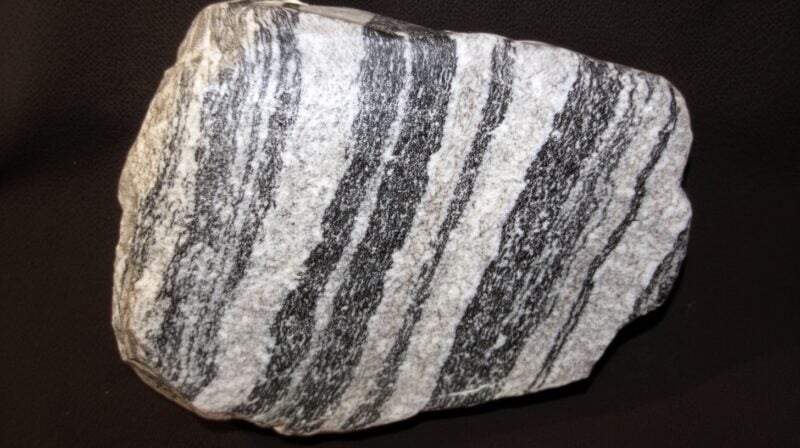
Gneiss has a foliated texture, meaning its minerals are aligned in distinct layers or bands. The rock’s appearance can vary based on the minerals it contains, but it is typically marked by alternating light and dark bands. The texture is coarse, with individual mineral grains visible to the naked eye. This makes gneiss visually appealing for both geological study and practical uses.
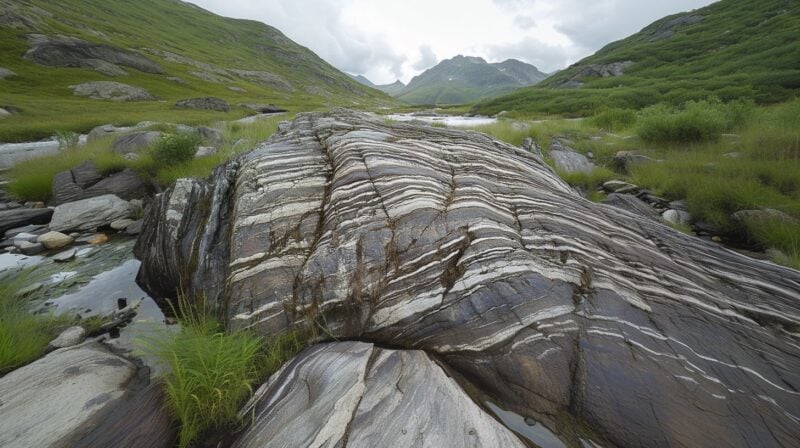
Gneiss forms through the process of metamorphism, which involves the transformation of a pre-existing rock under intense heat and pressure. This transformation occurs deep in the Earth’s crust, where the original minerals in the rock recrystallize into new minerals that are stable at these extreme conditions. Gneiss is commonly formed from granite or schist, but other rock types can also undergo metamorphism to form gneiss.
Gneissic banding is the defining characteristic of gneiss. It occurs when minerals in the rock separate into alternating layers during metamorphism. These layers, or bands, typically consist of light-colored minerals like quartz and feldspar, and darker minerals like mica or amphibole. The banding gives gneiss a striking appearance and reflects the extreme pressures that shaped it.
The parent rock of gneiss can be an igneous or sedimentary rock that has undergone metamorphism. Granite is a common parent rock, which, through heat and pressure, recrystallizes into gneiss. Schist is another possible precursor. The process involves the recrystallization of minerals without the rock melting, producing the banded texture that defines gneiss.
Schist and gneiss are both metamorphic rocks, but they represent different stages of metamorphism. Schist forms at lower pressures and temperatures, and it contains larger, more aligned crystals. As the pressure and temperature increase, schist can transition into gneiss, where the minerals separate into distinct bands. This transition marks a higher grade of metamorphism.
Ortho gneiss forms from an igneous parent rock, like granite, while para gneiss forms from a sedimentary parent rock, such as sandstone or shale. Both types of gneiss undergo the same process of metamorphism, but their original compositions lead to subtle differences in texture and mineral content. Ortho gneiss tends to be more resistant to weathering due to its igneous origin.
Gneissic granite is a rock that shares characteristics with both granite and gneiss. It often originates from granite that has undergone partial metamorphism, showing faint banding but retaining some of granite’s original structure. This type of rock is sometimes referred to as a transitional form between the two.
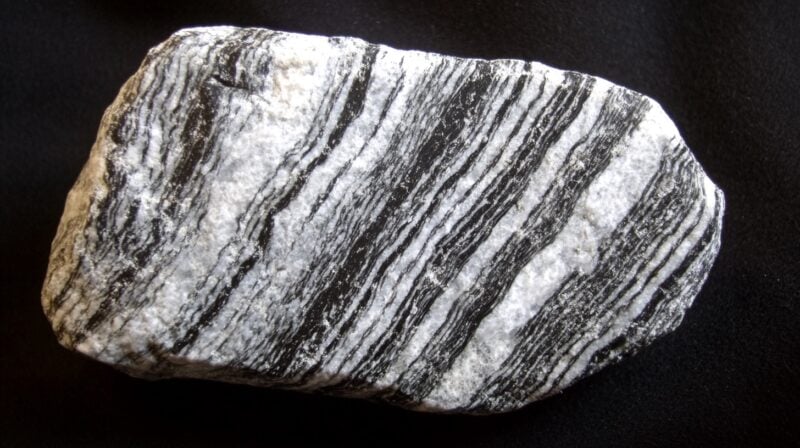
Banded gneiss is the most common form, recognized by its distinct layers of light and dark minerals. Other forms of gneiss, such as augen gneiss, exhibit large, eye-shaped mineral grains (called augens) rather than the fine banding typical of most gneissic textures. The differences in texture result from varying conditions during the metamorphic process.
Gneiss is a hard and durable rock, often used in construction due to its ability to withstand weathering. Its hardness is comparable to granite, making it a popular choice for building materials, particularly in foundations, paving stones, and countertops. This durability also makes it a preferred choice in outdoor settings where exposure to the elements is a concern.
The texture of gneiss is defined by its foliated structure, with minerals aligned in alternating bands. These bands are formed under high-pressure conditions, giving the rock its unique appearance. The texture is coarse, meaning the individual minerals are large enough to be visible to the naked eye. This makes gneiss a distinctive and easily recognizable rock in the field of geology.
Some interesting facts about gneiss include that it is one of the most common metamorphic rocks found on Earth. Gneiss is often used in construction, due to its hardness and resistance to weathering. Additionally, it can be formed from a variety of parent rocks, including igneous and sedimentary types. The word “gneiss” comes from the German word “gneist,” meaning “spark,” referring to its shimmering appearance.
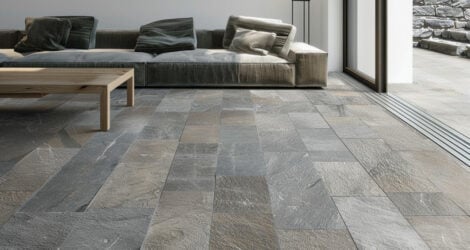
Gneiss is commonly used in construction and landscaping due to its durability and attractive appearance. It is often employed as a building stone for structures like walls, countertops, and decorative facades. In some cases, gneiss is used in sculptures or monuments, as its unique banding adds aesthetic value. Additionally, its hardness makes it suitable for use in road construction and other infrastructure projects.
In architecture, gneiss is used as a decorative and structural material. Its natural banding adds visual interest, making it a popular choice for building facades and interior designs. Gneiss is also employed in paving stones, retaining walls, and other outdoor applications. Its durability ensures that structures built with gneiss withstand the test of time, making it an excellent choice for both aesthetic and practical purposes.
Gneiss is found worldwide, but some of the most notable deposits are located in areas with a history of tectonic activity. It is commonly found in mountain ranges like the Alps, the Himalayas, and the Rocky Mountains. Gneiss can also be found in regions with ancient, stable continental crusts, such as the Canadian Shield and parts of Scandinavia.
Some of the most famous gneiss formations include the Lewisian Gneiss Complex in Scotland, which is one of the oldest rock formations in the world, and the Yilgarn Craton in Western Australia. Gneiss formations are also prominent in national parks, such as Yosemite in the United States, where gneiss can be seen in exposed rock faces and cliffs.
While gneiss and granite are both hard, durable rocks, they differ in their formation and appearance. Granite is an igneous rock, formed from the cooling of molten magma, while gneiss is a metamorphic rock that forms from existing rocks under pressure and heat. Gneiss also exhibits distinctive banding, whereas granite has a more uniform, granular texture.
Gneiss and schist are both metamorphic rocks, but schist forms under lower pressure and temperature conditions. Schist has a more flaky texture, with its minerals aligned in thin layers, while gneiss exhibits a banded texture with thicker mineral bands. The transition from schist to gneiss marks a higher grade of metamorphism, where pressures and temperatures are more extreme.
The term “niece rock” is often a playful mispronunciation of gneiss rock. While “niece” might sound similar, it has no geological meaning. The correct term is gneiss, pronounced “nice,” which refers to the metamorphic rock known for its banding patterns. This rock is commonly used in construction and known for its unique and attractive appearance.
Gneiss forms through the metamorphism of existing rocks under extreme pressure and temperature, typically deep within the Earth’s crust. Over time, these conditions cause the minerals within the rock to recrystallize and align into the characteristic bands seen in gneiss. This process can take millions of years, making gneiss one of the oldest rock types found on Earth.
Gneiss rock plays a significant role in everyday life, especially in construction and landscaping. Its durability and resistance to weathering make it ideal for outdoor applications like walls, pavements, and monuments. Additionally, its unique appearance, with alternating light and dark bands, makes it a popular choice for decorative stone in architecture, including countertops and building facades.








Luxurious furniture in lightweight marble
Dedalo is a company from Carrara that designs and produce monolithic luxurious furnishings in lightened marble, with a contemporary design. Our goal is to reaffirm the use of marble in everyday life without renouncing, for reasons of weight, to its three-dimensional vocation, proposing sculptural and extremely engaging shapes.