Contents
Choosing the right outdoor floor tiles means balancing aesthetics, functionality, and long-term durability. Among the top choices are natural stone tiles, known for their weather resistance and ability to enhance any exterior space—from gardens to driveways. With a wide selection of natural stones such as porphyry, quartzite, Trani stone, Luserna, travertine, marble, and granite, there’s a perfect fit for every architectural style. In this guide, we’ll explore the different types of natural stone tiles, their benefits, costs, and how to choose and maintain the best outdoor flooring solution.
Natural stone outdoor floor tiles are a highly popular choice thanks to their strength, durability, and natural charm. Unlike other materials, stone can withstand freezing temperatures, heat, and heavy wear while maintaining its appearance for decades. Ideal for patios, courtyards, and pathways, natural stone ensures excellent slip resistance and safety. It also blends beautifully with the surrounding environment, offering visual continuity between the home and garden.
Natural stones for outdoor flooring provide unique advantages: they don’t fade, warp, or require intensive maintenance. When ethically sourced, these materials are eco-friendly and sustainable—directly extracted from nature and processed without harmful chemicals. Each slab is one-of-a-kind, with distinctive veining and tones, making every outdoor space unique. Stone also enhances thermal comfort by absorbing heat and releasing it gradually.
The mechanical strength of natural stone is one of its key advantages. Materials like porphyry or Luserna stone can handle heavy loads and high traffic, making them ideal for driveways and high-use walkways. With proper installation and protective treatment, a natural stone floor can easily last more than 30 years.
In addition to performance, natural stone is prized for its beauty and eco-friendliness. It’s a non-toxic, low-impact material that also improves outdoor microclimates.
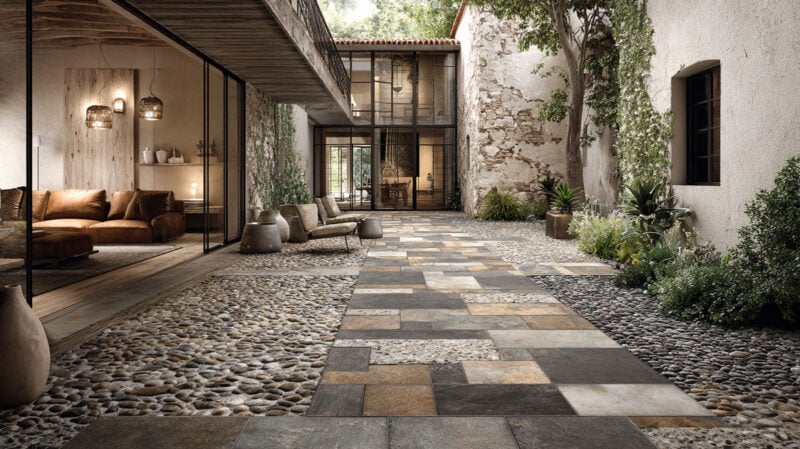
There are many types of natural stone for outdoor floors, each with its own characteristics. Popular options in Italy include Trani stone, porphyry, quartzite, Luserna, and sandstone. More recently, elegant yet durable stones like beola and gneiss have become popular. Your choice will depend on taste, budget, and the intended use of the outdoor area. Marble, travertine, and granite represent a more refined option, with a wide variety of colors and patterns to suit any design style.
Trani stone is a type of limestone prized for its elegance and strength. Available in different finishes, it works in both rustic and modern settings. Ideal for walkways, pool surrounds, and patios thanks to its high thermal shock resistance and luminous appearance.
Porphyry is one of the hardest and longest-lasting natural stones. It resists frost, chemicals, and wear. Commonly used in public areas, driveways, and squares, it’s also perfect for private homes where a rugged, natural look is desired. Its red-brown tones make it highly decorative.
Quartzite offers excellent resistance and a refined texture, ideal for contemporary outdoor spaces. It’s slip-resistant and comes in a variety of colors, making it perfect for terraces and pool decks. It strikes the ideal balance between aesthetics and performance.
Luserna stone is known for its durability and natural look. Quarried in the Piedmont Alps, it’s ideal for high-traffic areas. Its gray-green hue makes it well-suited for elegant and understated designs.
Sandstone and basalt offer refined visual appeal and solid mechanical strength. Basalt, a volcanic stone, is especially suitable for modern, minimalist patios. Both are easy to work with and allow for various layout patterns.
Beola and gneiss are Northern Italian stones often used in upscale landscaping. With gray-blue tones and excellent durability, they deliver a natural aesthetic. Antiqued marble, on the other hand, is ideal for those seeking timeless elegance while maintaining a natural outdoor look.
Lava stone is highly resistant to heat and frost, making it perfect for BBQ areas, driveways, and pool surrounds. Natural pebbles are ideal for decorative, permeable paths that combine style and functionality. Both materials allow for unique and personalized tile layouts.
Marble is a luxurious and elegant natural stone, also suitable for outdoor use. Though typically associated with interiors, when finished with anti-slip or antiqued treatments, it becomes ideal for courtyards, entryways, and patios. Available in a wide range of colors—from classic Carrara white to darker veined marbles—its weather resistance depends on the type and surface treatment. Antiqued marble adds a rustic charm that suits elegant garden designs.
Travertine is a porous limestone used since ancient Rome, valued for its timeless, natural beauty. For outdoor use, rough or bush-hammered finishes are preferred for better grip. It’s very resistant to moisture, weather, and pressure, making it ideal for warm, welcoming spaces. Color options range from beige to hazelnut, easily fitting both traditional and modern designs. Travertine is a favorite for patios, porches, and terraces.
Granite is one of the toughest natural stones, ideal for high-traffic and weather-exposed outdoor areas. It’s resistant to freezing, moisture, and wear, making it suitable for driveways, ramps, and year-round exposed zones. It has a naturally textured surface that can also be processed for added slip resistance. Available in a wide color palette—gray, black, pink, and green—its veining and grain add visual character. Granite is ideal for those wanting a durable yet refined surface.
When choosing outdoor floor tiles, you can go with either natural or reconstituted stone. Natural stone offers unmatched authenticity and strength, while reconstituted options are more budget-friendly and versatile. Both have pros and cons, depending on your project needs and budget.
Natural stone is the go-to choice for those who value authenticity, durability, and long-term investment. It’s ideal for weather-exposed or high-traffic areas. Though it requires more precise installation, it lasts for decades and adds property value.
Reconstituted stone is a lighter, more affordable alternative that replicates the look of real stone. It allows for faster installation and is ideal for large areas or low-maintenance needs.
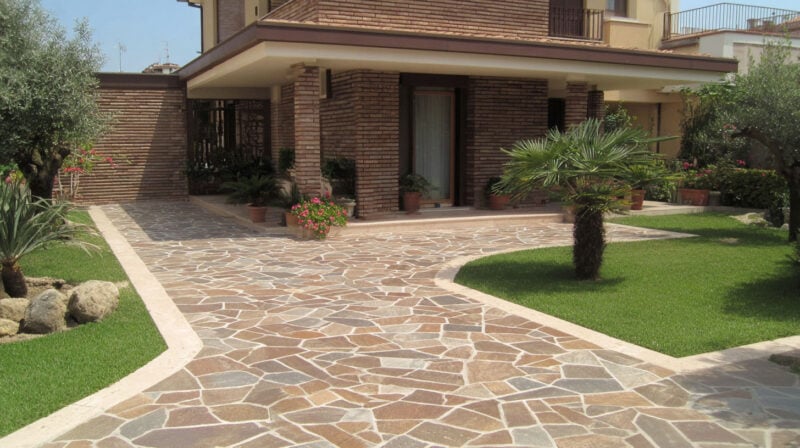
To select the best stone tiles for outdoor flooring, consider climate, usage, and home style. In areas prone to frost or humidity, low-porosity stones like porphyry or quartzite are recommended. In milder climates, lighter limestone options such as Trani or travertine are suitable.
Each stone reacts differently to weather conditions. Compact stones are best for damp climates, while lighter-colored materials are ideal for hot areas to avoid heat buildup. The surrounding architecture matters too—rustic homes call for traditional stone; modern homes pair better with neutral tones and clean lines.
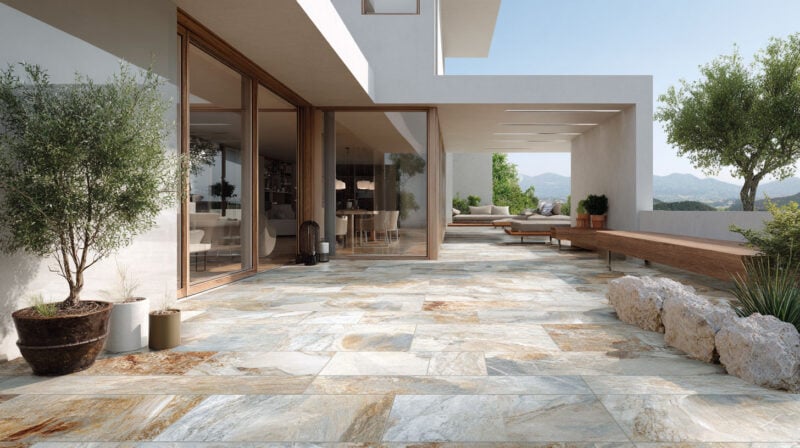
The 2026 trends highlight stone tiles with clean cuts and tones like light gray, beige, or concrete-effect. These finishes work seamlessly with minimalist outdoor furniture and linear lighting, creating sleek, harmonious environments. Concrete or sandblasted textures are especially in demand for modern, elegant homes.
To create bold visuals, combine stones of different tones or alternate between polished and rough finishes. Natural textures add authenticity, while brushed finishes bring refinement. Playing with contrasts between tiles and walls adds depth and interest.
Proper installation is crucial for long-lasting results. You can install tiles on sand or concrete base, depending on the type of stone and expected load. Joints and grouting must be well-sealed to prevent water infiltration.
Use a sand base for garden paths and a concrete slab for driveways or load-bearing areas. Both require a proper drainage layer and slight slope to ensure water runoff. Use coarse gravel and sand for the subbase.
For small areas, DIY installation is possible. After compacting the ground and laying stabilized sand, place the tiles with even spacing. In spring and fall, check for shifting or damaged joints. Regular upkeep ensures long-term durability. For premium materials like marble, it’s best to hire a professional for flawless results.
Proper maintenance extends the life of natural stone outdoor tiles. Apply water-repellent and stain-resistant products to reduce absorption. Clean with neutral, non-acidic detergents. At least once a year, wash thoroughly with a soft brush and warm water.
Use only cleaners made specifically for natural stone—avoid bleach, acids, or lime removers. Depending on the stone, applying a transparent protective sealer periodically can help maintain shine and protection.
Moss tends to grow in shaded, damp areas. An annual anti-mold treatment can prevent this. Oil or rust stains should be removed using specific stone-safe products. Occasional brushing helps prevent dirt buildup and keeps the surface breathable.
Prices for natural stone outdoor flooring vary depending on material, thickness, and origin. Here’s a general overview of average costs per square meter:
In northern regions like Trentino or Veneto, skilled labor for porphyry installation may push prices up to €80/m². In southern areas, prices are typically 15–20% lower. Water-repellent treatments and sealing can add €5–10/m².
Outdoor stone flooring opens up countless design possibilities. Combining different colors and formats creates elegant, personalized looks—from rustic to modern, stone always conveys timeless strength and beauty.
For country homes or historic villas, irregular, warm-toned stones are ideal. They create a cozy, authentic atmosphere that enhances traditional architecture. Mixing stone sizes adds an aged, charming look.
In contemporary settings, clean-cut, neutral-toned stones like gray or beige are preferred. Smooth lines and uniform surfaces enhance natural light and emphasize geometry. 2025 trends include concrete-effect and satin finishes for a refined look.
Light stones like Trani or Apulian limestone suit Mediterranean environments. When paired with aromatic plants and dry-stone walls, they evoke the warm, relaxed feel of Southern Italian homes.
What is the best stone for outdoor flooring? The most commonly used outdoor stones are porphyry, quartzite, and travertine. These materials offer great weather resistance and slip protection. Your choice will depend on your style preferences and budget.
How much does natural stone flooring cost per m²?
Outdoor stone flooring typically costs between €40 and €100/m². Prices vary depending on the type of stone, installation, and finish. Premium materials may exceed this range.
How much does 100 m² of porphyry cost?
The price for 100 m² of porphyry ranges from €4,000 to €10,000 for materials alone. Installation and base preparation can add to the total. Final cost depends on thickness and tile format.
What is the cheapest outdoor flooring?
The most budget-friendly option is often concrete interlocking pavers, which can cost under €30/m² for materials. They offer good value and are easy to install.
| Type of stone | Average Price €/m² |
|---|---|
| Porphyry | 30 – 60 |
| Trani Stone | 35 – 50 |
| Quartzite | 40 – 70 |
| Luserna | 45 – 65 |
| Reconstituted Stone | 20 – 40 |
| Travertine | 40 – 120 |
| Marble | 60 – 800 |
| Granite | 70 – 130 |








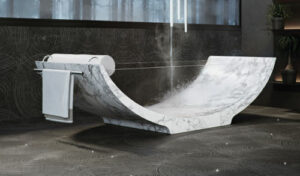
Luxurious furniture in lightweight marble
Dedalo is a company from Carrara that designs and produce monolithic luxurious furnishings in lightened marble, with a contemporary design. Our goal is to reaffirm the use of marble in everyday life without renouncing, for reasons of weight, to its three-dimensional vocation, proposing sculptural and extremely engaging shapes.