Contents
The drip edge is a technical component that plays a fundamental role in both construction and gardening. In architecture, it refers to a profile or groove designed to channel rainwater away, preventing it from running down wall surfaces or damaging underlying structures. In gardening, on the other hand, the term refers to small devices used in drip irrigation systems, essential for delivering water in a targeted and consistent manner to plants.
Its main purpose is to protect and optimize water management—preventing leaks and material degradation in construction, or ensuring efficient and sustainable watering in landscaping. Despite its simplicity, the drip edge is an indispensable element that combines functionality, practicality, and often aesthetic value, as seen in well-finished window sills or balconies.
From a technical standpoint, the construction drip edge is a groove or protruding profile installed on balconies, terraces, window sills, and cornices. Its function is to interrupt the flow of rainwater, directing it downward so it doesn’t run along the building’s vertical surfaces. This prevents issues such as stains, leaks, and peeling plaster.
In gardening, the term drip edge refers to the small emitter used in drip irrigation systems. This device releases water slowly and in a controlled manner directly at the base of plants, optimizing water use and improving soil health.
Although these definitions belong to different fields, they share the common goal of efficient water management, showing how a technical concept can adapt to various contexts. This article focuses on the drip edge as an architectural element.
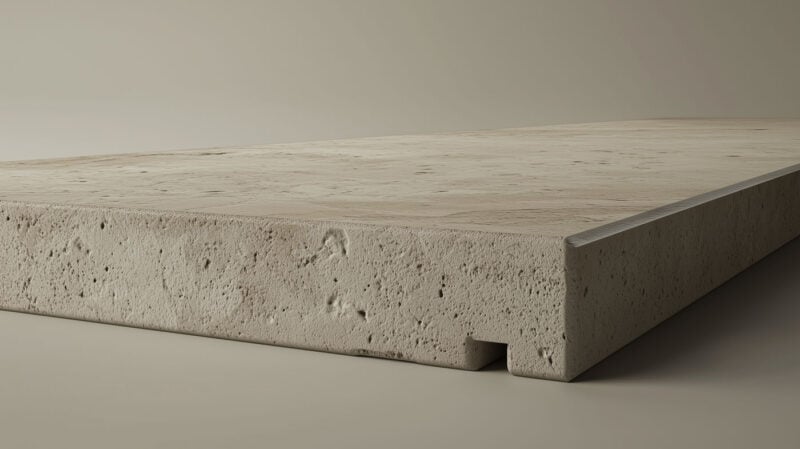
The concept of the drip edge is not new. It was already present in ancient Roman constructions in the form of small grooves in cornices and window sills, designed to prevent rain from damaging stone facades. Over the centuries, the evolution of building materials and techniques has made the drip edge increasingly common, especially in urban architecture.
With the advent of reinforced concrete and modern finishes, the drip edge has become a technical detail often integrated into metal profiles or marble, travertine, and granite cladding.
Today, the drip edge is a standard feature in almost every building, confirming its role as an essential architectural detail.
The drip edge on balconies serves a crucial purpose: preventing rainwater from running along the underside of the slab, which can damage plaster and load-bearing structures. Without this simple feature, over time, moisture stains, swelling, and even cracks could form, compromising the building’s stability.
Its strategic position is along the lower edge of the balcony, right where water drips off. Here, thanks to a groove or applied profile, water is deflected and allowed to fall freely. This simple yet effective mechanism extends the building’s lifespan and reduces maintenance costs.
In addition to its technical role, the balcony drip edge can also be an aesthetic element, made from materials and colors that harmonize with the building’s facade.
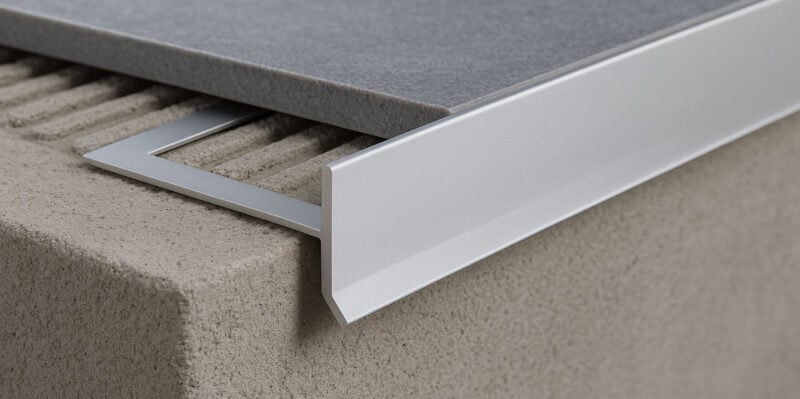
The most commonly used materials for drip edges vary based on function, budget, and architectural style.
Aluminum: Lightweight, durable, and available in various finishes, it is widely used in modern profiles. It requires little maintenance and fits well in contemporary settings.
PVC: Affordable and easy to install, it’s ideal for those seeking a practical solution. However, it has a shorter lifespan compared to more premium materials.
Marble and granite: Primarily used for high-end window sills and balconies. Besides functionality, they offer great aesthetic value and natural resistance to weather.
Each material has its own benefits. The choice depends on the project’s requirements and the desired level of finish. In modern residential buildings, aluminum and PVC are often preferred, while in historic settings, marble and stone are more common.
There are many types of drip edges, depending on their intended use:
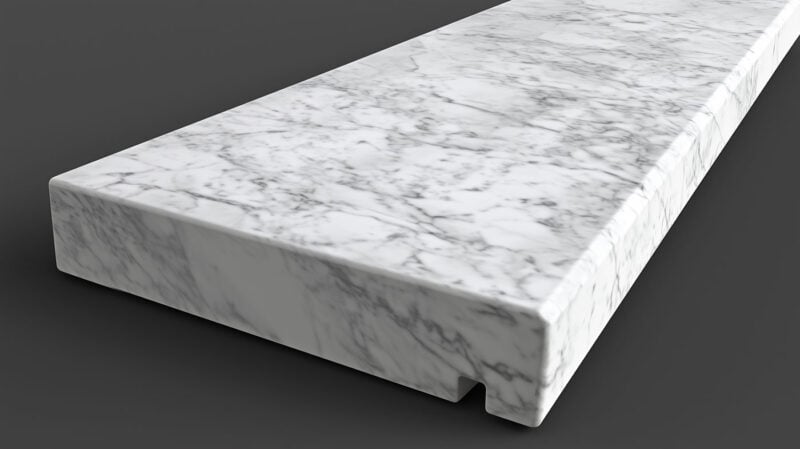
Grooved, integrated into cladding: The most traditional type, it’s a small incision along the edge of a marble or stone balcony or sill that breaks the water flow.
Metal profile: Common in modern construction, this is a prefabricated aluminum or steel element applied to the edge.
The choice of type depends on both aesthetics and functionality. In apartment buildings, standardized solutions are often preferred, while private homes are more likely to feature decorative materials.
Marble and granite window sills are among the most elegant and durable options for using drip edges in construction. These materials are not only aesthetically appreciated but also naturally resistant to water and weather.
In this case, the drip edge is made by carving a small groove on the underside of the sill. This detail prevents rainwater from running down the walls, thus protecting the plaster and reducing the risk of water infiltration.
Marble and granite offer not only durability and practicality but also add a touch of elegance to the facade. They are often used in prestigious buildings, villas, and high-end architectural projects where design meets functionality.
Proper maintenance—such as regular cleaning and water-repellent treatments—extends their lifespan, preserving both effectiveness and beauty.
Maintaining a drip edge is simple but essential to ensure its effectiveness. For balconies and sills, it’s important to regularly check that grooves are not clogged with debris or construction residue. For metal or PVC profiles, check for proper fastening and look out for cracks or corrosion.
A well-maintained drip edge not only performs better but also extends the system’s lifespan and lowers repair or replacement costs.
Drip edges for balconies and window sills are widely available at building material stores, hardware stores, and renovation centers. Here, you can physically examine different materials, compare quality and finishes, and get technical advice from staff.
Many retailers also offer custom cutting services for sills and balconies, which is especially helpful for custom projects. Buying in-store provides direct and immediate support, ideal when installing a drip edge in a specific context.
The online market offers a wide range of drip edges for both construction and gardening. Shopping online allows you to quickly compare prices and features, finding the best solution without leaving home. Many e-commerce platforms also offer fast shipping and easy returns in case of errors.
For those looking for marble, granite, or professional-grade profiles, specialized online construction stores offer certified high-quality products. Digital shopping is therefore a convenient, fast, and often more affordable solution.








Luxurious furniture in lightweight marble
Dedalo is a company from Carrara that designs and produce monolithic luxurious furnishings in lightened marble, with a contemporary design. Our goal is to reaffirm the use of marble in everyday life without renouncing, for reasons of weight, to its three-dimensional vocation, proposing sculptural and extremely engaging shapes.