Contents
Countertop backsplashes, also referred to as short backsplashes or backsplash trims when lower in height, are essential elements for completing and refining a kitchen countertop. These are profile strips installed along the back edge of the countertop, where it meets the wall, with the purpose of sealing and protecting the surface. Beyond their practical use, they also have a strong aesthetic function, helping the kitchen look clean, polished, and visually harmonious. Choosing the right backsplash trim improves not only the resistance and longevity of the countertop, but also the overall design of the space. There are many types and materials available, each with specific features suited to different needs, both in terms of style and maintenance.
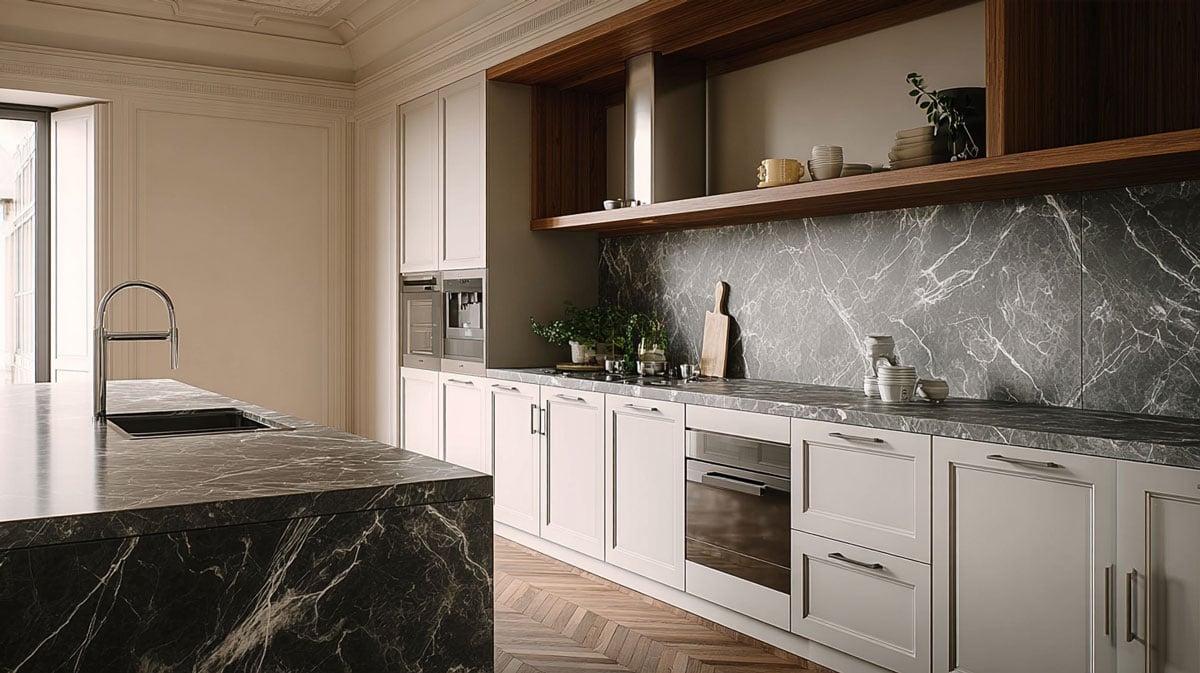
The terms backsplash trim, short backsplash, and full-height backsplash are often confused, but they refer to different elements. A backsplash trim—or short backsplash—is the small strip located between the kitchen countertop and the wall. It typically ranges in height from 1.2 to 2.5 inches (3 to 6 cm) and is used to protect the edge and prevent water or dirt from seeping behind the countertop.
A full-height backsplash, on the other hand, is a taller wall covering that spans the area between the countertop and upper cabinets, made from materials like glass, tile, or stainless steel.
In short: the backsplash trim seals and finishes the edge, while the full backsplash protects the vertical surface and is a core part of the kitchen’s design.
Countertop backsplashes serve a primarily practical function: they protect both the countertop and wall from water infiltration and moisture, helping to prevent long-term damage. This is especially important near sinks and cooktops, where splashes and residue are more common.
Aesthetically, backsplash trims provide a clean, uniform finish that creates a seamless look throughout the kitchen. Thanks to the wide variety of available materials and colors, they also serve as design elements that can either blend in with the rest of the kitchen or provide contrast for a more modern, personalized effect.

Aluminum backsplash trims are among the most popular options because they’re lightweight, durable, and easy to install. Aluminum is moisture-resistant, rust-proof, and simple to clean. It comes in a wide range of colors and finishes, from classic brushed aluminum to painted or anodized versions. These trims are perfect for modern, minimal kitchens where clean lines and simplicity are key.
Another major advantage is the affordable price, which makes aluminum trims an accessible choice without compromising quality. The only downside is that they may lack the refined aesthetic appeal of more premium materials.

PVC backsplash trims offer a practical and budget-friendly option. They’re lightweight, water-resistant, and come in a wide variety of colors and finishes, including realistic wood, marble, and metal effects. This makes them highly versatile and suitable for virtually any kitchen style. Maintenance is minimal—just wipe them down with a damp cloth.
However, compared to other materials, PVC is less resistant to impacts and heat, so it’s best suited for kitchens with standard, everyday use. Their low cost makes them ideal for those seeking a good balance between appearance and function without overspending.
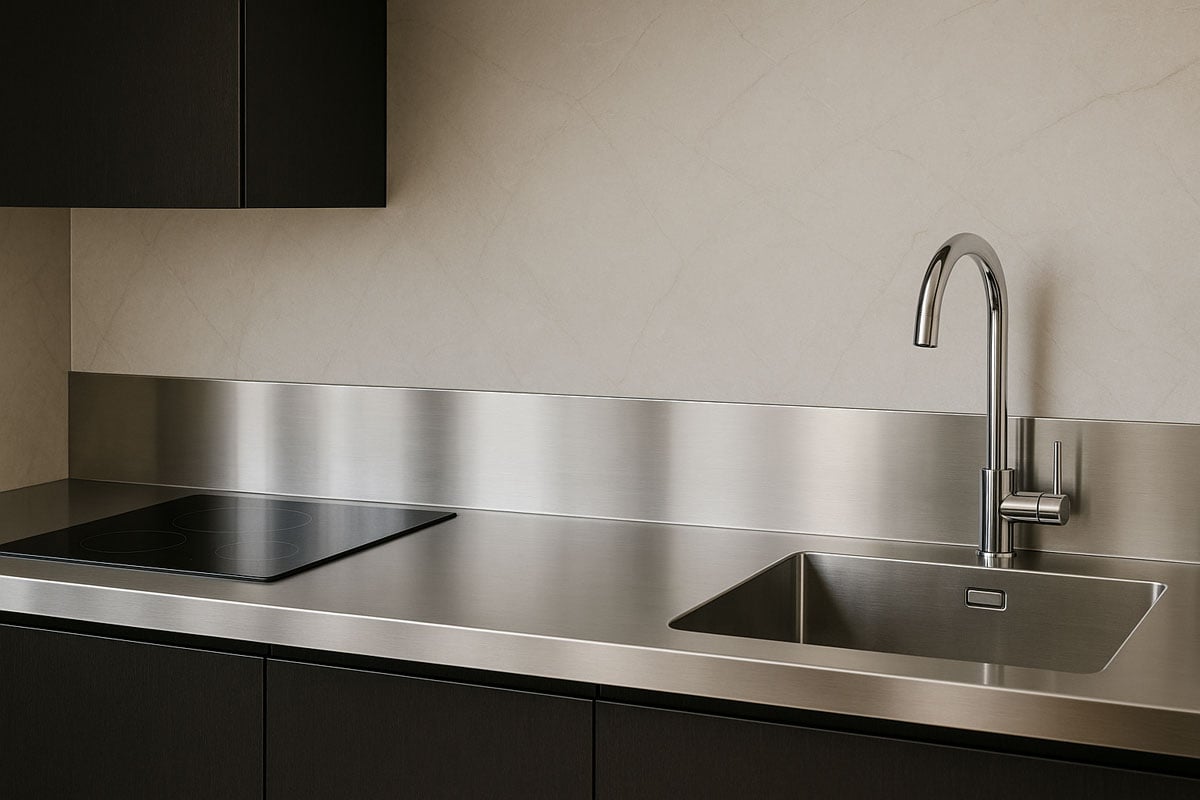
Stainless steel backsplash trims represent hygiene and modernity. Widely used in professional kitchens, stainless steel is also appreciated in home environments for its durability and ease of cleaning. It’s non-porous, mold-resistant, and extremely long-lasting.
Visually, it adds a sleek, contemporary touch that fits perfectly with modern or industrial kitchens. The only drawback is that it tends to show fingerprints and scratches easily, requiring frequent cleaning. Still, stainless steel’s timeless appeal makes it a trendy and long-lasting choice.
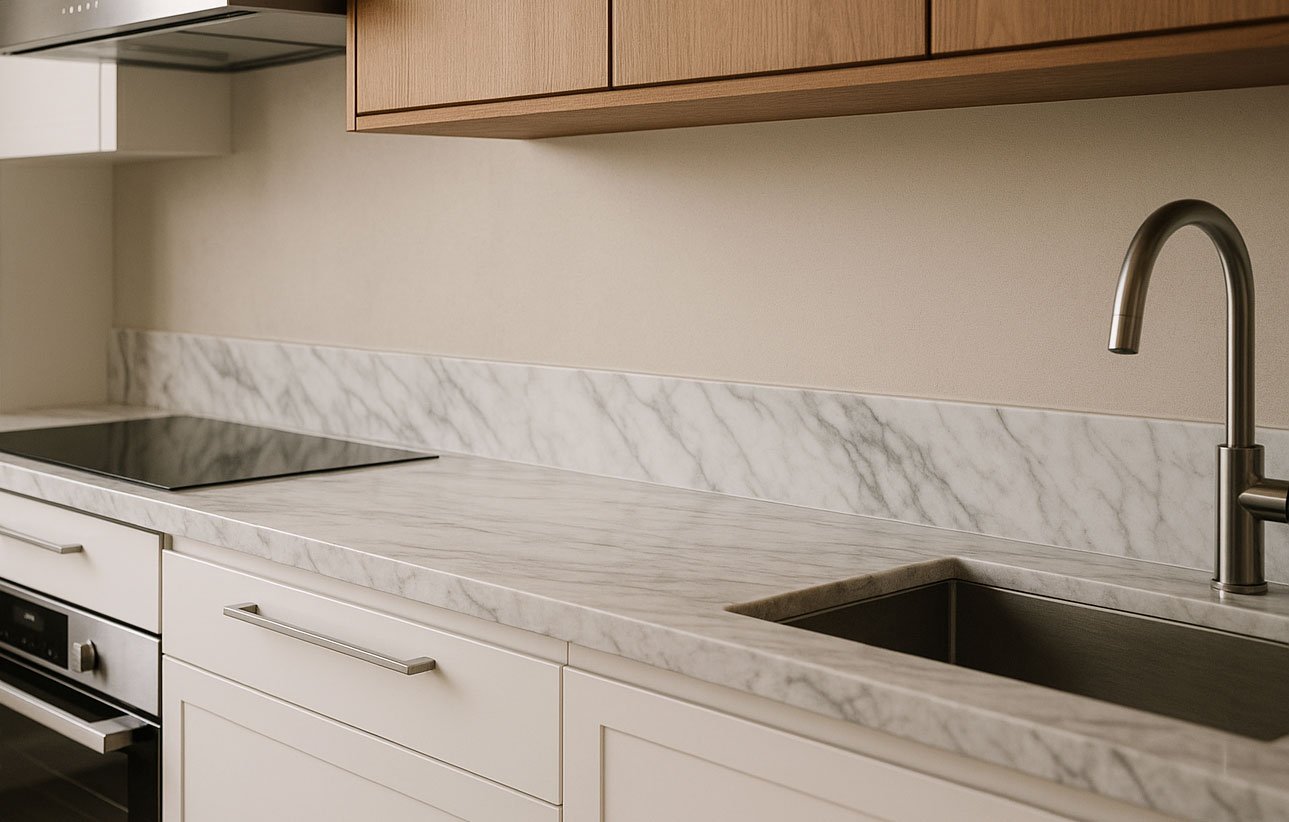
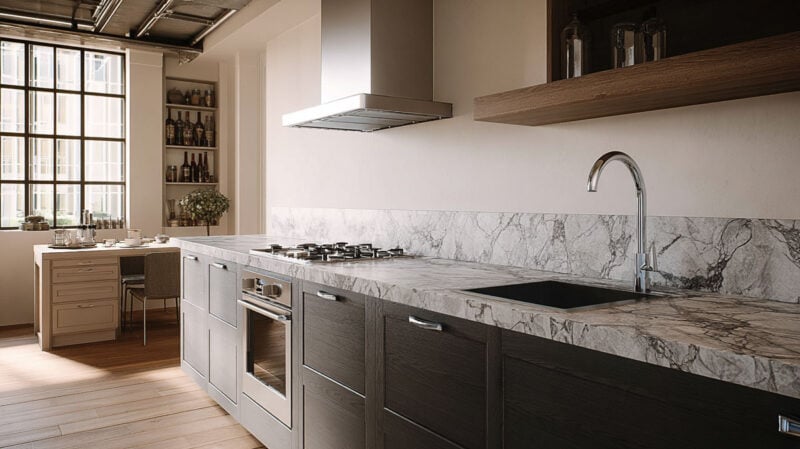
Marble and stone backsplash trims are perfect for those seeking elegance and sturdiness. Ideal when paired with countertops made of marble, granite, or quartz, they create a high-end, cohesive look. These materials are highly resistant to heat, scratches, and wear, making them excellent for high-traffic or heavily used kitchens.
The natural veining in marble and the textures of natural stone add unique character to each piece, turning the kitchen into an exclusive and sophisticated space.

Laminate backsplash trims are one of the most common options in today’s kitchens. This material comes in a wide variety of colors, finishes, and realistic imitations of wood, stone, and metal. Laminate is durable, easy to clean, and relatively affordable, making it a very popular choice.
Because it’s available in so many variants, it’s easy to match the backsplash with the countertop to create a consistent design. While it offers good resistance for daily use, laminate can degrade over time due to moisture and heavy impacts—especially around sinks and stoves—so care is advised.
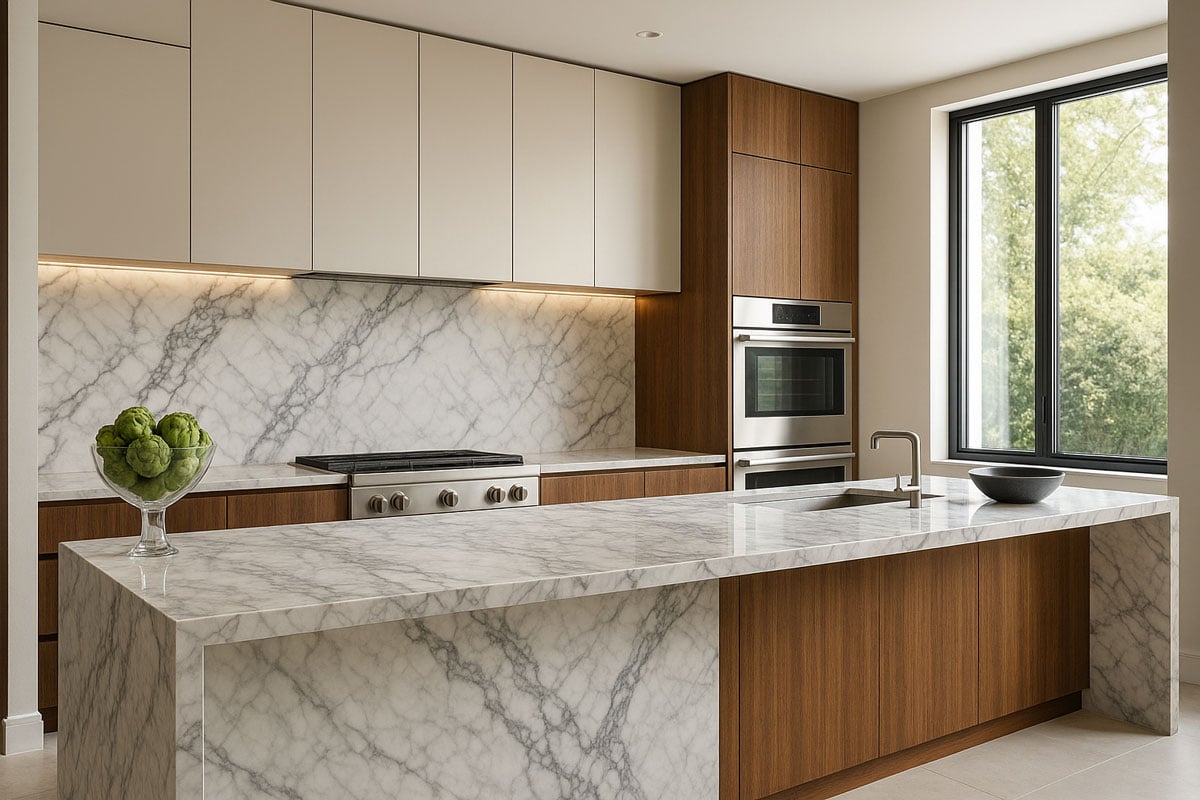
The key to choosing the right countertop backsplash lies in coordinating it with your countertop and cabinetry. A backsplash made from the same material as the countertop offers continuity and elegance, while a contrasting material or color adds personality and visual interest.
For minimalist kitchens, tone-on-tone combinations work best. For rustic or traditional kitchens, stone- or wood-effect trims are especially appreciated. The backsplash should never feel like an afterthought—it should integrate smoothly with the overall kitchen style.
Backsplashes come in a variety of thicknesses, colors, and finishes. The thickness usually ranges from 1.2 to 2.5 inches (3 to 6 cm), though slimmer or taller versions are also available for different effects.
Color choices range from neutral tones like white, gray, and black to more distinctive finishes like concrete, wood grain, or marble effects. The finish also plays a key role: matte finishes offer a modern and understated look, while glossy finishes provide brightness and elegance. This wide range ensures you’ll find the perfect fit for your functional and aesthetic needs.

Modern countertop backsplashes are defined by clean lines, neutral colors, and materials like aluminum, stainless steel, or concrete-look laminate. They are perfect for contemporary or minimalist kitchens.
Traditional backsplash trims, on the other hand, feature natural materials like wood, marble, or stone, which add warmth and sophistication. The choice depends on your personal taste and the overall style of your kitchen. If you prefer a cozy, classic vibe, natural textures and warm finishes are ideal. For a modern look, go for sleek, minimalist options.
DIY installation is a viable option, especially with PVC or aluminum trims that are sold as ready-to-install kits with corner and end profiles. They can be attached easily using screws or special adhesives—no professional tools needed. This makes DIY ideal for small home improvement projects or for those looking to save on installation costs.
However, precise measurements and proper sealing at the joints are crucial to prevent water or dirt infiltration. With a bit of manual skill, you can achieve solid, professional-looking results.
Hiring a professional installer ensures a flawless result, especially when working with premium materials like marble, granite, or stainless steel. A professional will custom-cut the trim, finish the corners cleanly, and apply sealants and accessories correctly. This prevents installation errors and increases the longevity of the backsplash.
Installation costs vary depending on the material and complexity, but typically range from €10 to €30 per linear meter. It’s a small investment that guarantees quality, precision, and long-term durability.
Countertop backsplashes can be replaced when they become worn out or when it’s time to update the kitchen’s look. Replacement is relatively simple for PVC or laminate trims, while marble and stainless steel require professional help.
Maintenance mainly involves regular cleaning and, in some cases, protective treatments—such as water repellents for natural stones. With proper care, backsplashes can last many years while maintaining both function and style.
The cost of countertop backsplashes depends on material, size, and craftsmanship. PVC and laminate options are the most affordable, while marble and stone cost more due to their value and the complexity of processing.
Additional features like corner caps and finishing ends can also affect pricing, as does professional installation. The choice depends on your budget, but it’s worth noting that higher investment typically means greater durability and performance over time.
On average, PVC or laminate backsplashes cost between €8 and €15 per linear meter. Aluminum trims range from €15 to €30, while stainless steel versions start at about €30 and can exceed €50 per meter.
Marble and stone backsplashes are the most expensive, generally ranging from €60 to €150 per meter depending on the type and level of finish. When comparing prices, it’s important to consider both upfront cost and long-term durability.
To buy high-quality backsplashes without overspending, compare several retailers and take advantage of online sales or big-box hardware store promotions. Choosing easy-to-install materials saves on installation costs, while modular backsplash systems allow for flexibility without additional expenses.
Always weigh quality against price: sometimes, spending a bit more initially means getting a product that lasts for years, saving you from frequent replacements.
Cleaning backsplash trims is quick and easy. For daily maintenance, all you need is a damp cloth and a mild detergent. Avoid using abrasive, acidic, or aggressive cleaners, especially with PVC or laminate. For aluminum and stainless steel, use anti-fingerprint cleaners. For marble or stone, go with gentle products specifically made for natural stone surfaces.
Regular cleaning keeps your backsplashes looking great and functioning well over time.
To keep your backsplash trims in perfect condition, prevent stains and scratches whenever possible. For marble or stone, apply water-repellent sealers periodically. With PVC and laminate, avoid impacts and sharp objects. Use soft cloths on metal surfaces to prevent micro-scratches.
Everyday habits—like quickly wiping away spills—go a long way in preserving the backsplash’s appearance and performance.
Over time, backsplashes can lose some of their original shine. To maintain it, use the right products based on the material: gentle polishes for marble and stone, protective sprays for stainless steel, and neutral cleaners for PVC and laminate.
With regular upkeep and proper care, backsplashes can remain elegant and functional for many years, continuing to enhance your kitchen’s overall aesthetic.








Luxurious furniture in lightweight marble
Dedalo is a company from Carrara that designs and produce monolithic luxurious furnishings in lightened marble, with a contemporary design. Our goal is to reaffirm the use of marble in everyday life without renouncing, for reasons of weight, to its three-dimensional vocation, proposing sculptural and extremely engaging shapes.